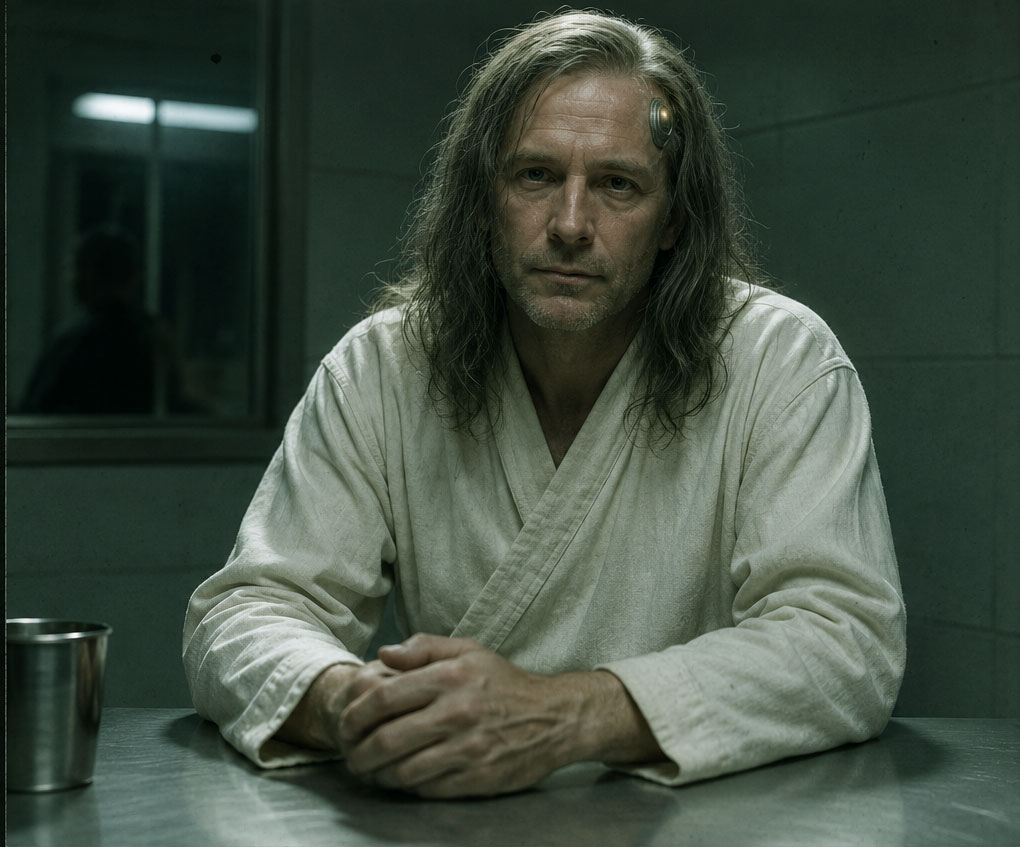
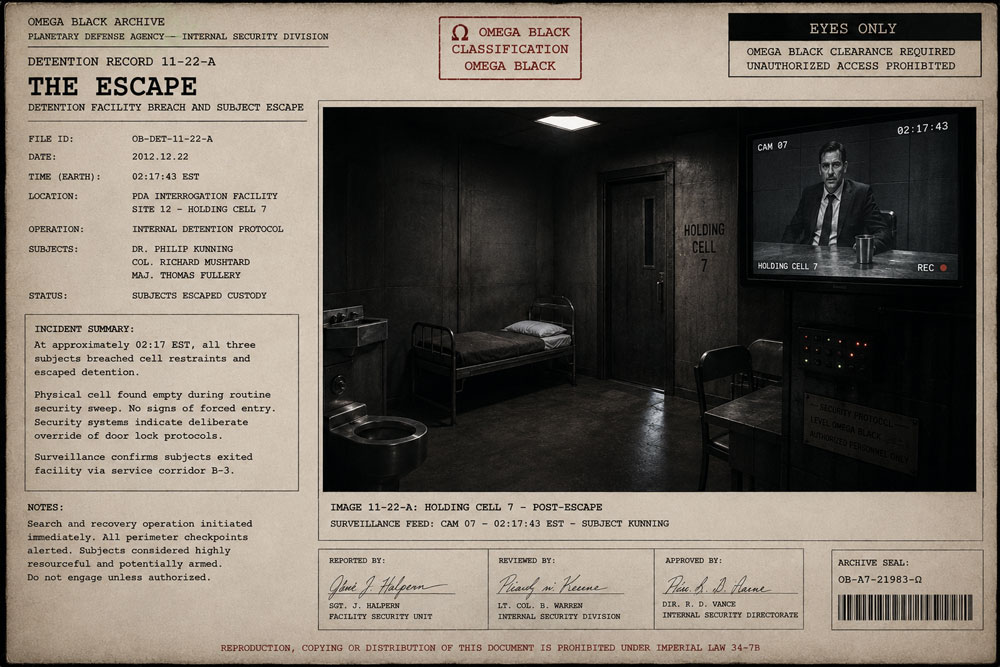
The Planetary Defense Force called it a debriefing.
It lasted considerably longer than anyone expected.
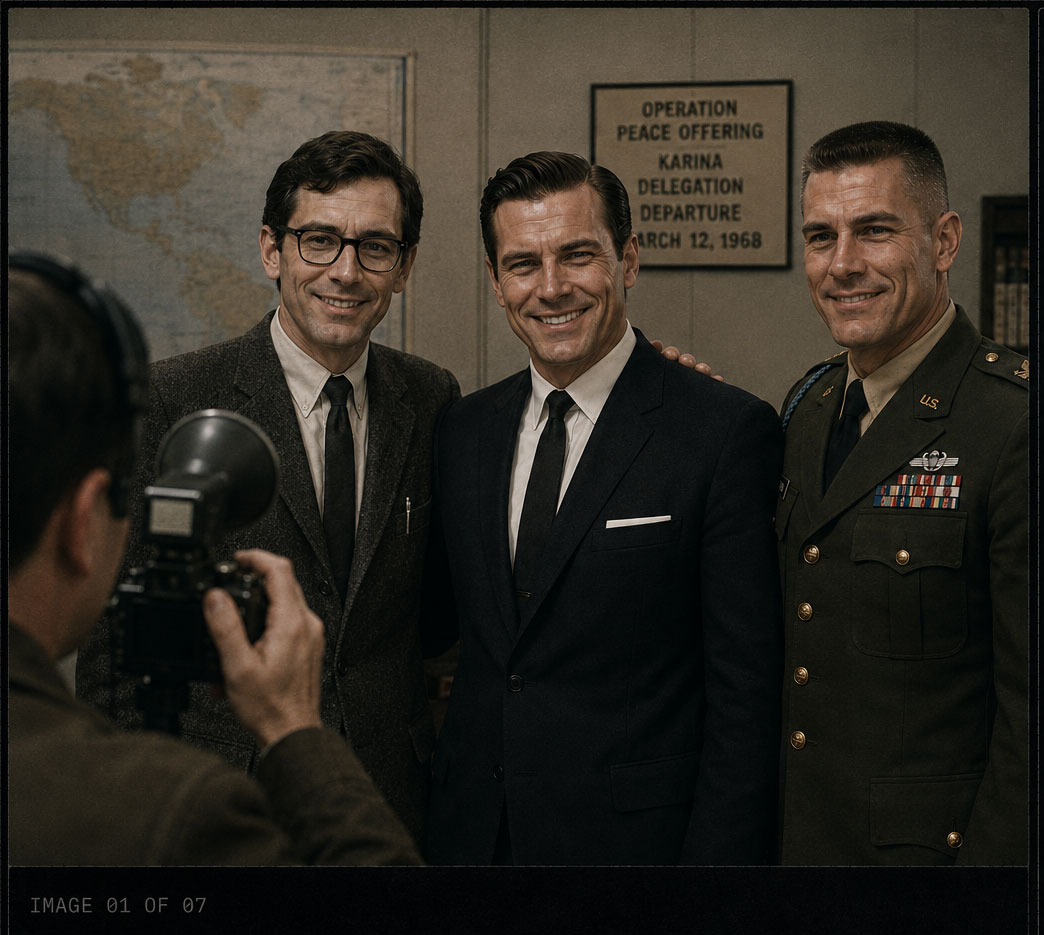
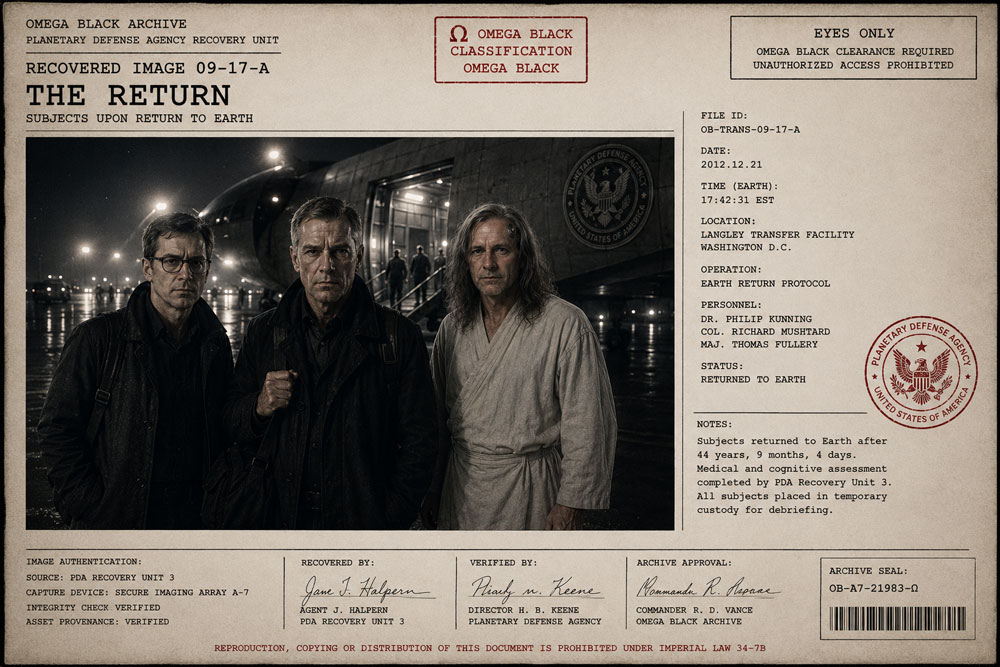
Kunning, Mushtard and Fullery were kept apart.
The PDF wanted three independent accounts of forty-four years on Karina.
What it received were three versions of events that agreed almost perfectly on facts—
and frequently disagreed on reality.
Kunning cooperated.
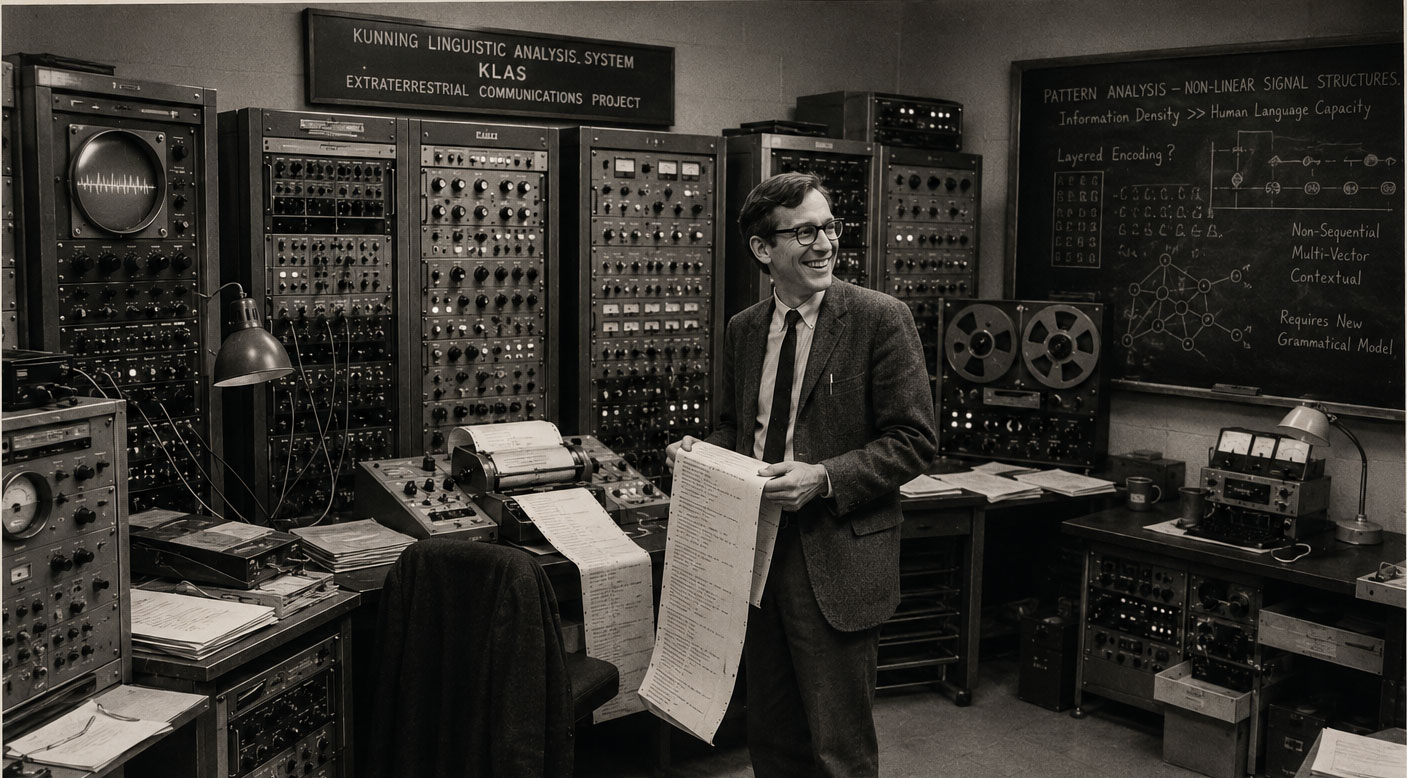
He answered technical questions in extraordinary detail.
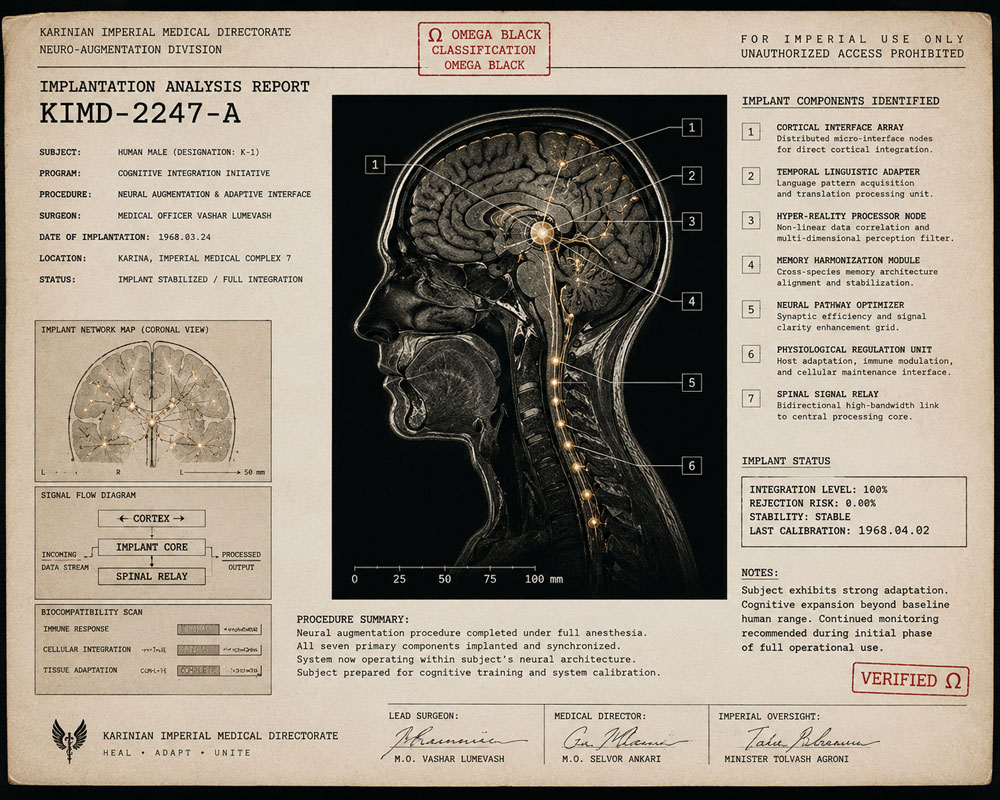
He described Karinian language, transportation, energy systems, medicine and neural augmentation.
Then the questions reached Hyper Reality.
His answers became less useful.
Not because he refused to explain.
Because the people questioning him did not understand the explanations.
“How does it work?”
Kunning considered the question.
“How does what work?”
“The implant.”
“That isn't what you're asking.”
The examiner stopped.
Kunning leaned forward.
“You want to know how I knew what you were going to ask.”
The examiner had not yet asked that question.
The interview ended shortly afterward.
Mushtard's interrogations were different.
The PDF was particularly interested in the Karinian military.
Weapons.
Defenses.
Command structure.
Fleet capabilities.
Strategic vulnerabilities.
Mushtard answered some questions.
Others he refused.
When asked why, he explained that Operation Peace Offering had been a diplomatic mission.
He had been trusted with information that was not Earth's to possess.
The interrogator reminded him that he was an officer of the United States military.
Mushtard stared at him.
“I was.”
The room became quiet.
The interrogator asked where his loyalty now belonged.
Mushtard's answer was immediate.
“To Earth.”
“Then answer the question.”
“No.”
The PDF classified him as uncooperative.
Mushtard considered the description accurate.
Fullery caused different problems.
He cooperated enthusiastically.
Too enthusiastically.
He answered questions for hours.
He discussed Karinian politics.
Religion.
Culture.
Imperial institutions.
The Empress.
The Commander.
The implants.
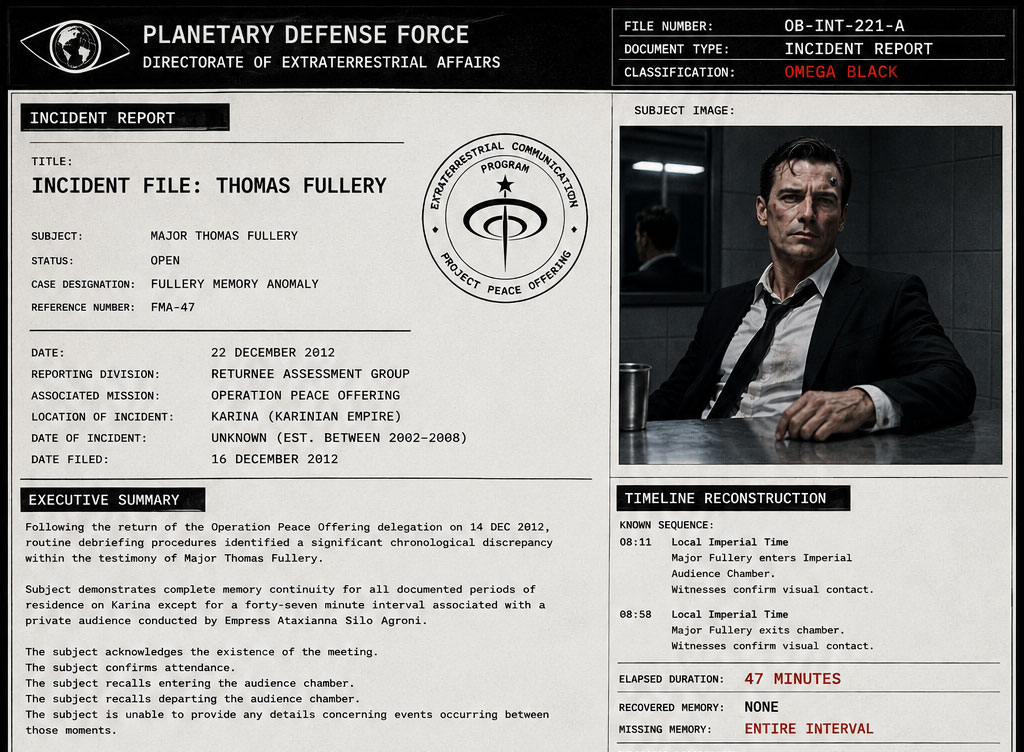
The missing forty-seven minutes.
He appeared to hide nothing.
Then analysts compared his interviews.
Small details changed.
A conversation occurred in one account but not another.
An event happened on different dates.
Fullery remembered entering rooms that Karinian records indicated he had never visited.
When confronted with the inconsistencies, he seemed genuinely interested.
“Which version did I tell you first?”
The interrogator told him.
Fullery thought about it.
“Keep that one.”
“Why?”
“It probably happened to you.”
The answer was entered into the record without interpretation.
Medical teams examined the implants.
That produced the first real alarm.
Initial scans showed structures integrated throughout the nervous system.
Some appeared metallic.
Others appeared biological.
Several had no recognizable composition.
A second scan produced different results.
Components visible during the first examination were missing.
New structures appeared elsewhere.
The PDF recalibrated the equipment.
The results changed again.
The implants were not moving.
At least, Kunning insisted they were not.
“You're measuring them differently.”
The technicians disagreed.
Kunning shrugged.
“That's what I said.”
Attempts to disable the augmentations were abandoned after Kunning warned that nobody—including him—understood what separating them from the host nervous system would do.
The PDF did not consider that reassuring.
Security increased.
Then the anomalies began.
Clocks inside the detention area drifted apart despite sharing the same timing source.
Recorded conversations contained sentences no participant remembered speaking.
A security officer reported passing Mushtard in a corridor.
That was impossible.
Mushtard had been locked inside his room.
The officer insisted.
Security reviewed the footage.
At 14:32, the officer could clearly be seen passing Mushtard in the corridor.
At 14:32, another camera showed Mushtard sitting inside his locked room.
Both recordings were authenticated.
Neither showed evidence of manipulation.
Fullery disappeared for forty-seven minutes.
His door never opened.
His biometric monitor remained active.
The security camera showed him sitting calmly in his chair for the entire period.
Nevertheless, three PDF personnel reported encountering Fullery elsewhere in the facility.
One spoke with him.
When Fullery was questioned afterward, he denied leaving the room.
Then he asked:
“How long was I gone?”
The investigator froze.
Nobody had told him there was an incident.
Fullery looked toward the observation glass.
“Forty-seven minutes?”
Nobody answered.
Fullery smiled.
“Interesting.”
The PDF stopped treating the anomalies as equipment failures.
Kunning was questioned again.
This time there was only one subject.
Hyper Reality.
The examiner asked whether the implants could alter electronic systems.
Kunning said possibly.
Could they manipulate surveillance?
Possibly.
Could they affect memory?
Possibly.
Could they predict events?
Kunning hesitated.
“You're still thinking of these as separate things.”
The examiner became frustrated.
“Then tell me what they do.”
Kunning sat back.
For the first time during the debriefings, he appeared uncertain how to answer.
Finally he said:
“They allow us to perceive relationships your brain normally throws away.”
“What does that mean?”
“It means reality contains more information than you experience.”
“And you experience it?”
“Some of it.”
The examiner looked toward the camera.
Kunning followed his gaze.
Then Kunning said something that would later become important.
“You should stop relying on those.”
“Why?”
Kunning looked directly into the lens.
“Because you're beginning to assume that seeing something happen means it happened.”
The debriefing officer ended the session.
Security was increased again.
The three men were moved into stricter isolation.
Additional cameras were installed.
Independent monitoring systems were established.
Armed personnel were stationed at every access point.
The Planetary Defense Force believed it was finally taking the appropriate precautions.
Kunning knew otherwise.
Mushtard had already begun watching the guards.
Fullery had started counting cameras.
And somewhere inside the facility, systems descended from KLAS were beginning to receive a signal nobody had transmitted.